
How a WARDOGS match is scored
The mode is a king-of-the-hill built for a hundred people, and its one unusual idea is that holding ground pays twice: it scores, and it pays.
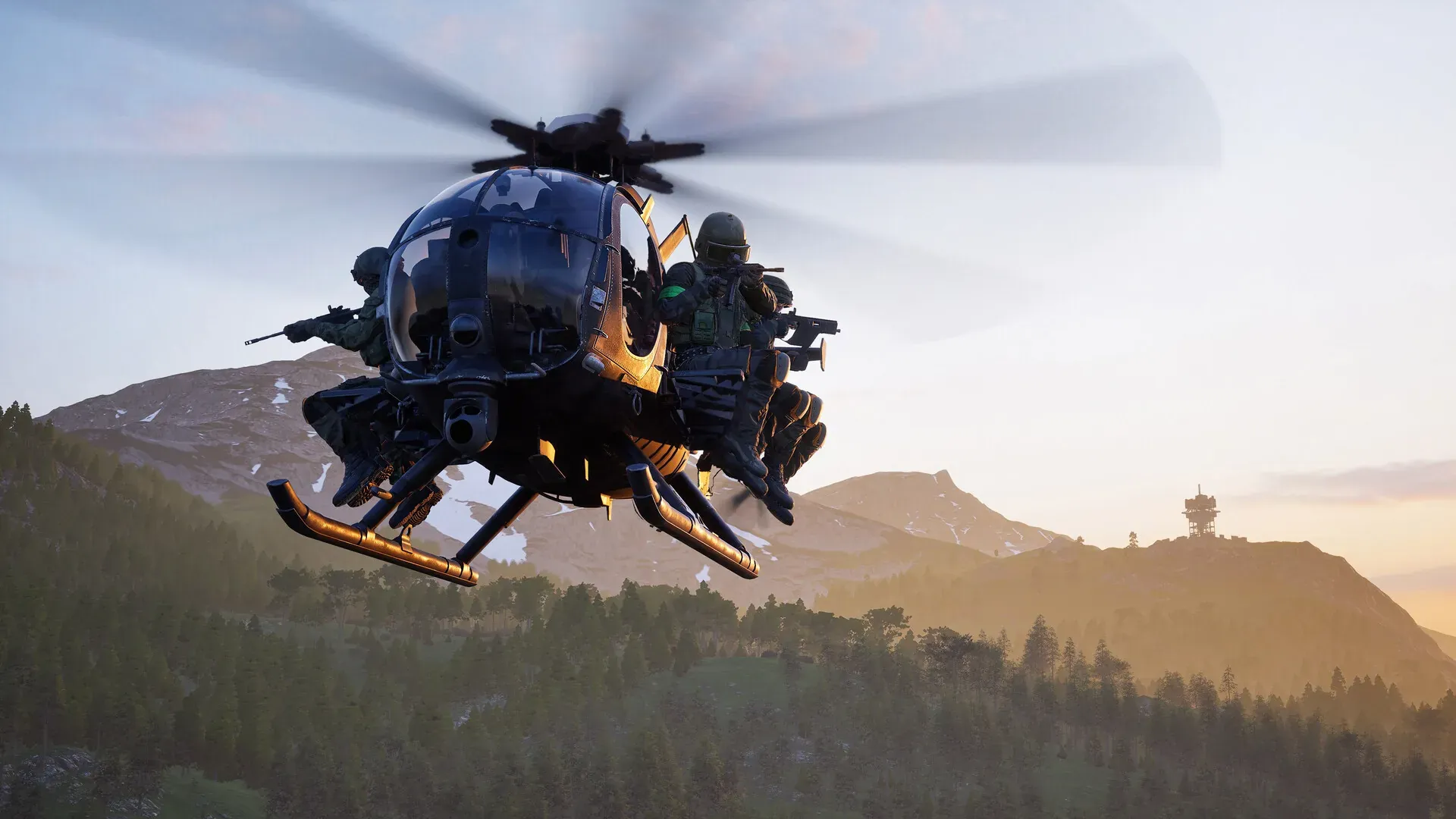
| Element | Value |
|---|---|
| Players | 100, split across 3 teams |
| Map | 256 km² |
| Control Zone | 2 × 2 km, randomised within the map |
| Scoring | The team with the most players inside the zone earns points |
| Match ends | First team to 100 points |
| Squad size | Unlimited |
Described in Steam announcement — TOP QUESTIONS
The Hot Zone is the whole tactical argument
Inside the Control Zone sits a smaller sub-zone that moves during the match. Standing in it counts each player double toward their team’s head count, and pays double cash. So the same square of ground decides the scoreboard and the economy at once, which is why a team can be losing on points and still be winning the match — it is banking the money that pays for its next loadouts. The cash side is on the economy page, and what that cash buys back is on the loadout page. Teams can also drag the Hot Zone toward a tower they hold, which the towers page walks through. A similar rule existed in Arma 3’s King of the Hill mod, whose Priority Area counted each player as two, and the Arma comparison maps the rest of the mod’s terms onto this game.
Why randomising the zone matters more than it sounds
A two-kilometre square drawn somewhere inside a 256 square kilometre map means the terrain you are fighting over is different every match — sometimes a settlement, sometimes open ground, sometimes ridgeline. That is the studio’s stated reason for the design: no two matches play out the same. It also means that route knowledge and vehicle choice matter more than memorised lanes, which feeds directly into why the Driver and Pilot tracks carry the transport unlocks. How much terrain that leaves out of play is on the map page.
Three teams, not two
A third team changes the arithmetic of every fight: whoever commits first to contesting the zone is exposed to the team that waited. The factions are not cosmetic labels either — each has its own identity in the setting, covered on the factions page.